Özge Güneş
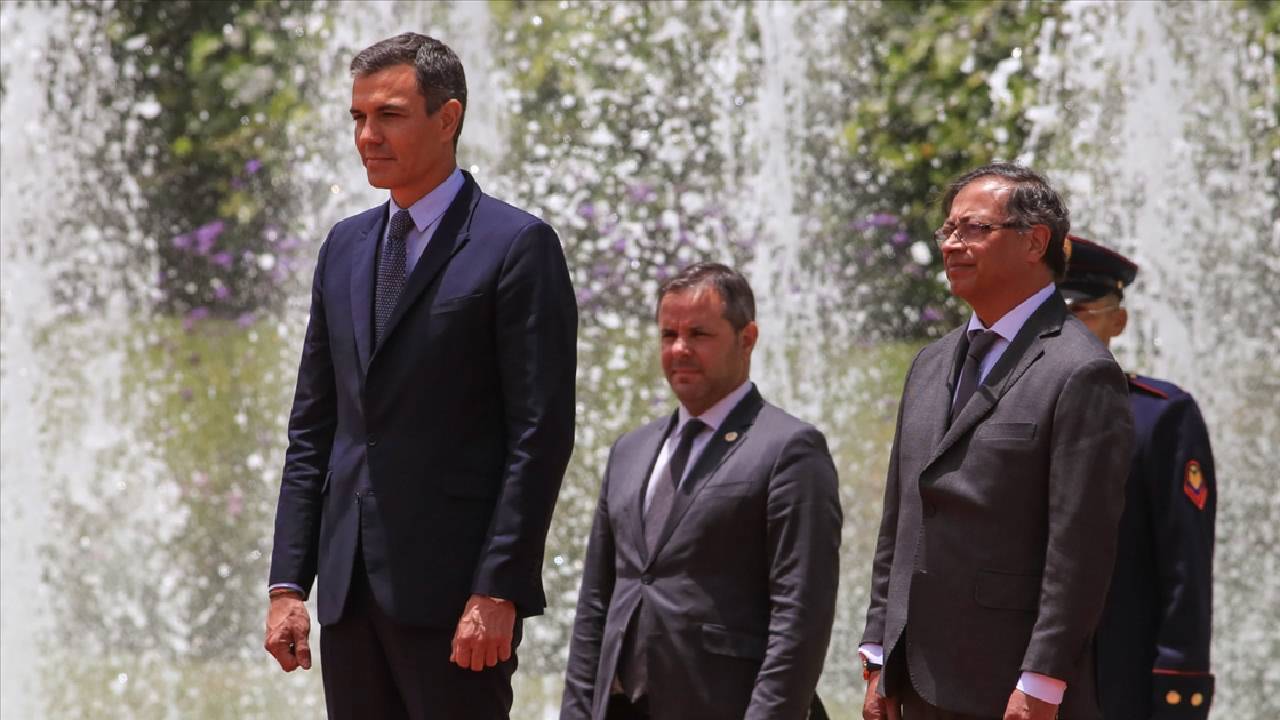
The rise of Trumpism on a global scale and the deepening of geopolitical crises—fuelled by the global militarist wave setting the entire region ablaze through the Israel-Iran tension—have laid bare the ground for an ideological conflict that is pushing the boundaries of the established order in Spain. Spanish Prime Minister Pedro Sánchez challenged the Western bloc’s foreign policy, which is based on complicity, and did not limit himself to merely producing diplomatic rhetoric. He also erected a barrier ranging from calls to close military bases to demands for embargoes. However, this stance simultaneously made him a target of both the international right-wing coalition and the right-wing opposition within the country. On the other hand, it is important to recognise that these attacks on Sánchez are not isolated incidents. Today, any progressive move that pushes the boundaries of imperialism faces a systematic campaign of elimination. In this context, the wave of attacks against Sánchez not only lays bare the geopolitical cost of defying imperialism’s militarist order but also serves as a stark reminder that left-wing and progressive politics cannot break this siege by confining itself to institutional defence lines or the parliament; it underscores the vital importance of forging connections with the masses.
***
The building blocks of Sánchez’s placement on the target board in global geopolitics were laid by his opposition to US-Israeli imperialism. Sánchez, who strongly condemned Israel’s lawless attacks on Lebanon, had called on the international community to halt the shipment of weapons to be used in Gaza and Lebanon. Sánchez did not stop there. He demanded that Itamar Ben-Gvir, Israel’s far-right Minister of National Security, be barred from entering all European Union countries. Ben-Gvir had sparked a global outcry by a video footage in which the forced detained activists to kneel and mocked them, following the military intervention against the Global Sumud Fleet, which had set sail in May 2026 to deliver humanitarian aid to Gaza. In this respect, it is fair to say that Sánchez has become a critical litmus test on the grounds of human rights, standing in opposition to the EU’s tradition of ambivalent foreign policy. Another step that made Sánchez appear dangerous in the eyes of global powers was his determination to keep channels of dialogue with Iran open. Amid the shadow of US and Israeli military operations against Iran and the Strait of Hormuz crisis, Spain became the first Western country to reopen its embassy in Tehran, setting a precedent in the Western world. Refusing to bow to Trump’s threatening foreign policy and military strategies that set the region ablaze, Sánchez has been positioned in the international press as a veritable “global icon opposing Trump”. For the same reason, he has also been placed in the firing line. The fact that Sánchez, seen by the US and Israel as having strayed from the line, is being besieged by his domestic collaborators, and that this campaign is gaining momentum immediately in its wake, points to a structural situation.
INTERNAL SIEGE
Sánchez’s clear stance against the militarist tide in foreign policy appears to have sparked a campaign of wear and tear at home. As highlighted in analyses published in the French newspaper L’Humanité, right-wing groups in Spain (Vox and the radical wing of the People’s Party) have set in motion a systematic disinformation campaign aimed at bringing down the Sánchez government. According to these analyses, the public is being manipulated through doctored fake videos, falsified documents and baseless claims amplified across digital platforms. Furthermore, it is claimed that this wave of disinformation is proceeding in collusion with certain factions within Spain’s judicial system. Moreover, these siege-like manoeuvres have entered a new phase with police raids on the headquarters of the Spanish Socialist Workers’ Party (PSOE) and corruption investigations. These operations constitute a coordinated move aimed at both undermining Sánchez’s authority within the party and completely eroding his legitimacy in the eyes of the public.
Sánchez, however, asserts that these organised attacks are in fact targeting Spain’s progressive gains and its independent foreign policy, and is calling on his entire organisation to wage a comprehensive struggle both on the streets and at the ballot box. In this sense, it is possible to frame Sánchez’s struggle not merely as a battle for the government’s survival, but as a line of resistance against the operations waged by imperialism and its local collaborators against democratic politics.
THE OTHER SIDE OF THE COIN
This siege against Sánchez brings to mind the ‘lawfare’ processes—judicial campaigns aimed at clearing out progressive figures such as Lula da Silva in Brazil and Cristina Kirchner in Argentina—carried out through the judiciary. It is clear that this is no coincidence: across this broad spectrum stretching from Latin America to Europe, attempts are being made to break the will that could not be bent at the ballot box through the use of falsified documents. Indeed, the impeachment and imprisonment of Pedro Castillo—Peru’s first indigenous and left-wing president—amidst an endless barrage of lawsuits from the right-wing Congress and the entrenched elite is a striking example of this strategy. Similarly, the ousting of Manuel Zelaya in Honduras—who sought to implement populist reforms—through a joint military-judicial coup demonstrates just how ruthlessly imperialism and its local collaborators utilise institutional and legal instruments against the left.
Moreover, this recklessness against the left does not proceed independently of the Trumpist right-wing alliances on the other side of the coin. Trump does not hesitate to openly protect leaders and right-wing populist regimes that pledge allegiance to him, particularly in Latin America, as part of his own global hegemonic plan. The ideological alliance forged by Bolsonaro in Brazil, Milei in Argentina and many others with Trump represents the most tangible manifestation of this global right-wing front. Whilst Trump strives to keep neoliberal right-wing regimes aligned with him afloat at any cost, he also criminalises leaders pursuing an independent foreign policy through domestic right-wing apparatuses.
THE TEST AHEAD
The siege faced by Sánchez actually brings back to the table a reality the left has confronted at every critical juncture: it is impossible to break through the siege woven by right-wing populism, imperialist aggression and judicial processes via an institutional and parliamentary line that does not rely on the masses. Experience to date clearly demonstrates that defeat is inevitable for struggles confined solely to parliamentary corridors, social media outbursts or institutional party coalitions.
Indeed, in France—which offers one of the most dynamic examples of frontline struggle in Europe—the injustices, smear campaigns and obstructions faced by the France Unbowed (La France Insoumise) movement and its leader Jean-Luc Mélenchon have demonstrated how even institutional politics can be ruthlessly sidelined when the boundaries of the established order are pushed.
Moreover, the label of “progressive icon” attributed to Sánchez may stem not from his representing a radical structural break, but from the fact that other centre-left and social democratic parties in Europe (such as the Labour Party in the UK) have shifted entirely to the right and unconditionally surrendered to imperialist militarism. Indeed, the Sánchez government is also criticised for failing to produce public solutions to the housing crisis—the most pressing issue for the people—and rising housing costs. The loss of votes his party suffered in the elections held in the Andalusia region last week is interpreted precisely as a result of this class-based and economic squeeze.
Let us also recall this: when Lula set out in Brazil to ‘shut the gates of hell’ against Bolsonaro, he was not backed merely by a coalition of political parties. Lula had forged organic links with everyone whom Bolsonaro had criminalised, impoverished and condemned to starvation – namely grassroots movements such as the Landless Workers’ Movement (MST), the MTST, which fought for the rights of the homeless, and the APIB, which defended the rights of indigenous peoples. This experience remains a litmus test for many of today’s diverse struggles.
It has been proven time and again that a political approach that fails to engage with labour organisations and the people’s pressing demands (housing, food, security) cannot shake the status quo. This is the test that remains for the future following the attacks on Sánchez. Such struggles can only be won through an alliance that springs from the grassroots and empowers workers and social movements.
***
GEOPOLITICAL RECKONING IN THE COLOMBIAN ELECTIONS
The most recent example of this systemic purge can currently be observed in Colombia. As the term of Colombian President Gustavo Petro—who has long defied the Trump doctrine, from threats of tariff hikes to demands for military intervention in the Venezuelan crisis—comes to an end due to constitutional limits, the elections have effectively turned into a geopolitical showdown.
Abelardo de la Espriella, the far-right candidate of the Homeland Defenders Movement who has pledged to strengthen the military alliance with the US and Israel, finished the first round in the lead. Meanwhile, Iván Cepeda, the candidate of the left-wing alliance Pacto Histórico, surpassed even Petro’s vote share to achieve the greatest success in the history of the left, securing 41.13% of the vote and securing his place in the second round. Whilst it is claimed that a questionable process lies behind these announced first-round results, concrete allegations of foreign interference have also been on the agenda in the run-up to the election. Ecuadorian President Noboa’s announcement, prior to the election, that he had met with the right-wing candidate Espriella and lifted the customs duty on Colombian products was condemned by the Colombian government as a deliberate interference in the electoral process.
In a statement following the first-round election results, Petro stated that the far-right project, which also has the backing of former President Uribe, is built on the premise of completely crushing and imprisoning progress. Petro described this structure as “mafia fascism” and called on all sectors of society, the people and the youth to join the “Alliance for Life” for the future. Colombian youth did not leave this call unanswered; they took to the streets and declared their support for the newly formed alliance.
Note: This article is translated from the original article titled Emperyalizme kafa tutmanın bedeli, published in BirGün newspaper on June 3, 2026.