Sarya Toprak
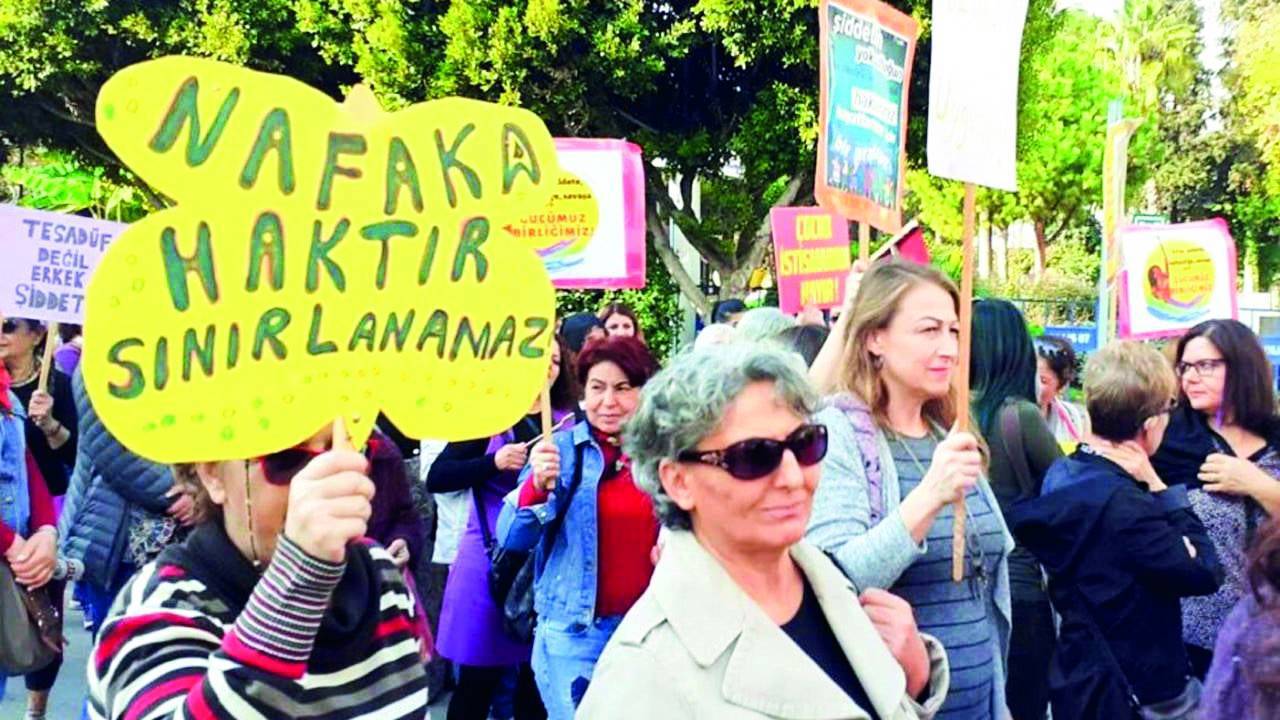
The annulment by the Constitutional Court of the provision regarding the granting of poverty alimony "indefinitely" has become the newest link in the attacks targeting the hard-won rights of women. While the decision is projected to enter into force nine months from now, Parliament is expected to prepare a new regulation within this period.
Attempts to limit alimony to a specific duration or tie it to certain conditions have come to the agenda multiple times in recent years within the scope of judicial packages and family law studies. Women emphasise that alimony is not a "lifelong salary", as a perception is being attempted to be created in the public eye, but a right aimed at balancing the economic inequalities brought about by divorce; meanwhile, how the economic security of women will be protected post-divorce once a restriction is imposed on the right to alimony remains a major question mark.
Making a statement following the decision, Minister of Justice Akın Gürlek stated that the regulation is one of the fundamental titles of the upcoming judicial package. Gürlek said, "We find the annulment decision delivered by the Constitutional Court regarding the 'indefinite alimony' regulation in the Turkish Civil Code highly valuable on behalf of the principles of justice and equity."
INEQUALITY PERSISTS
The Civil Code stipulates that alimony is to be granted not specifically to the woman, but to the party who will fall into poverty due to divorce. However, in Türkiye, the party driven into poverty is predominantly women. While women's participation in the labour force trails considerably behind that of men, childcare, elderly care, and domestic labour continue to weigh heavily on women to a large extent.
Women's organisations state that the alimony debate is being conducted independently of these structural inequalities. The issue is not solely the income gap at the moment of divorce; it is the lifelong economic losses faced by women who have remained distanced from education, career, and income opportunities for years due to unpaid care labour. For this reason, restricting the right to alimony will render women more vulnerable post-divorce. According to women's organisations, this situation will also make it harder for women lacking economic security to leave marriages where they face violence.
Lawyer Nazan Moroğlu emphasised that in debates concerning poverty alimony, Article 175 of the Civil Code must be read together with Article 176. Moroğlu reminded that alimony can terminate automatically in the event of the death of one of the spouses or the remarriage of the alimony creditor; and by a court ruling in cases such as the eradication of poverty, cohabitation as if factually married, securing an income, or a change in the capacity to pay. Moroğlu pointed out that, contrary to the perception created in the public eye, poverty alimony is therefore not "indefinite under all circumstances", and noted that the party demanding alimony in practice being predominantly women is directly related to women being left behind in education, employment, and decision-making mechanisms in Türkiye.
A TOTAL ATTACK
The issue of alimony is not independent of other developments experienced in the field of women's rights in recent years. When the withdrawal from the Istanbul Convention, the debates targeting Law No. 6284 (the law on the protection of the family and prevention of violence against women), the "Year of the Family" and "Decade of the Family and Population" policies, calls to increase fertility, and discourses defining women primarily through their roles within the family are considered together, the alimony debate sits within a broader political framework.
While the ruling power positions the family as the cornerstone in the construction of the new regime, it frequently intervenes in women's position in the public sphere, working life, and bodily rights. For this reason, the alimony debate is also viewed as a part of women's struggle for citizenship rights, secularism, and social equality.
WAR HAS BEEN DECLARED ON OUR HARD-WON RIGHTS
Lawyer Özlem Günel Tekşen / EŞİK (Women's Platform for Equality) Volunteer
They present poverty alimony as "indefinite alimony", but there is no such thing. Its name is poverty alimony. The AYM has delivered a decision contrary to equality. We have not seen the reasoned decision, but whatever its justification may be, considering that female employment is so low and inequality is so high in Türkiye, it will not be wrong to say that female poverty and child poverty will deepen further. According to information leaked from the Judicial Package, a 5-year limit will be imposed on alimony. They will probably use the AYM decision as a pretext too. Women provide domestic labour and care labour at home precariously. Women spend very long hours on housework compared to men. They perform uncompensated labour. With the abolition of the right to alimony, they will be divorced and cast out without any security. This will cause women to be unable to break away from homes where they face violence, saying "at least I have a roof over my head".
We see that a total war has been declared against women's rights. Until a while ago, as women, we were trying to acquire more rights. Then we shifted to a defensive position. Now, we have entered a period where we are losing our rights. We will continue to struggle against this. We saw that the AYM's Can Atalay decision was not implemented and that the Court of Cassation could resist this. Similarly, the AYM had also annulled the obligation for a woman to use her husband's surname. However, like many AYM decisions, these were not implemented either. The alimony decision, on the other hand, will probably be implemented swiftly.
THE SOLUTION IS TO ELIMINATE INEQUALITY
• Istanbul Bar Association: The annulment decision regarding poverty alimony is contrary to the principle of equality in the Constitution. We do not accept the clawing back of rights that women have won through struggles spanning more than a century via the political maneuvers of the ruling power. We are not giving up on our right to alimony.
• Mor Çatı Women's Shelter Foundation: We know that the AYM's alimony decision serves the interests of men. We invite lawmakers to concern themselves with rectifying the systematic discrimination women are subjected to and its consequences.
• Federation of Women's Associations of Türkiye: At the center of the alimony debate lies not the victimization of men, but the right to life and economic security of women driven into poverty post-divorce. If the decision changes before the law changes, what needs to be debated is not solely alimony, but the future of legal certainty, predictability, and the principle of the social state.
CONSTITUTIONAL COURT CALLED IT A "REQUIREMENT OF THE SOCIAL STATE" 14 YEARS AGO
The Constitutional Court, which has annulled the poverty alimony regulation today, had found it in conformity with the Constitution in 2012, rejecting the request for the annulment of the phrase "indefinitely" in Article 175 of the Civil Code. The court had emphasised in its decision at the time that poverty alimony aimed to protect the spouse falling into poverty due to divorce. In the AYM's decision dated 2012, it was expressed that the regulation was a "requirement of the principle of the social state governed by the rule of law". At that time, 16 out of 17 members had voted in favour of rejecting the annulment request, whereas the AYM this time annulled the exact same regulation by 12 votes against 3. Thus, the regulation counted as a requirement of the social state in 2012 has been found unconstitutional 14 years later.
HOW DID THE ALIMONY DEBATE BEGIN?
Alimony came to the agenda on a wide scale for the first time with the report of the TBMM (Grand National Assembly of Türkiye) Divorce Commission established in 2016. The Commission suggested imposing a time limit on alimony, arguing that "indefinite alimony creates victimization", particularly in short-term marriages. Alimony was brought back to the agenda within the scope of the first Judicial Reform Strategy Document prepared in 2019. In 2020, during the "Family Law Reform" studies prepared under the Presidency, the subject of alimony was debated once more.
In this period, "lifelong alimony victimization" campaigns were conducted in some media organs close to the ruling power. Alimony came to the agenda again particularly during the preparations for the 7th, 8th, 9th, and 10th Judicial Packages. However, due to the backlash from the women's movement, a concrete legislative amendment did not materialise.
Note: This article is translated from the original article titled Nafakayı değil yoksulluğu bitirin, published in BirGün newspaper on June 5, 2026.