İlhan Uzgel
The prevailing view is that, from 2015 onwards, Erdoğan shifted to a transactional or retail-style politics, particularly by removing EU relations from a values- and membership-focused framework and turning them into a bargaining process.
This interpretation is partly correct. All the deals Erdoğan struck with American experts and influential figures, lobbies, EU leaders and domestic business circles during the process of establishing the AKP from 1998 onwards have been laid bare in detail.
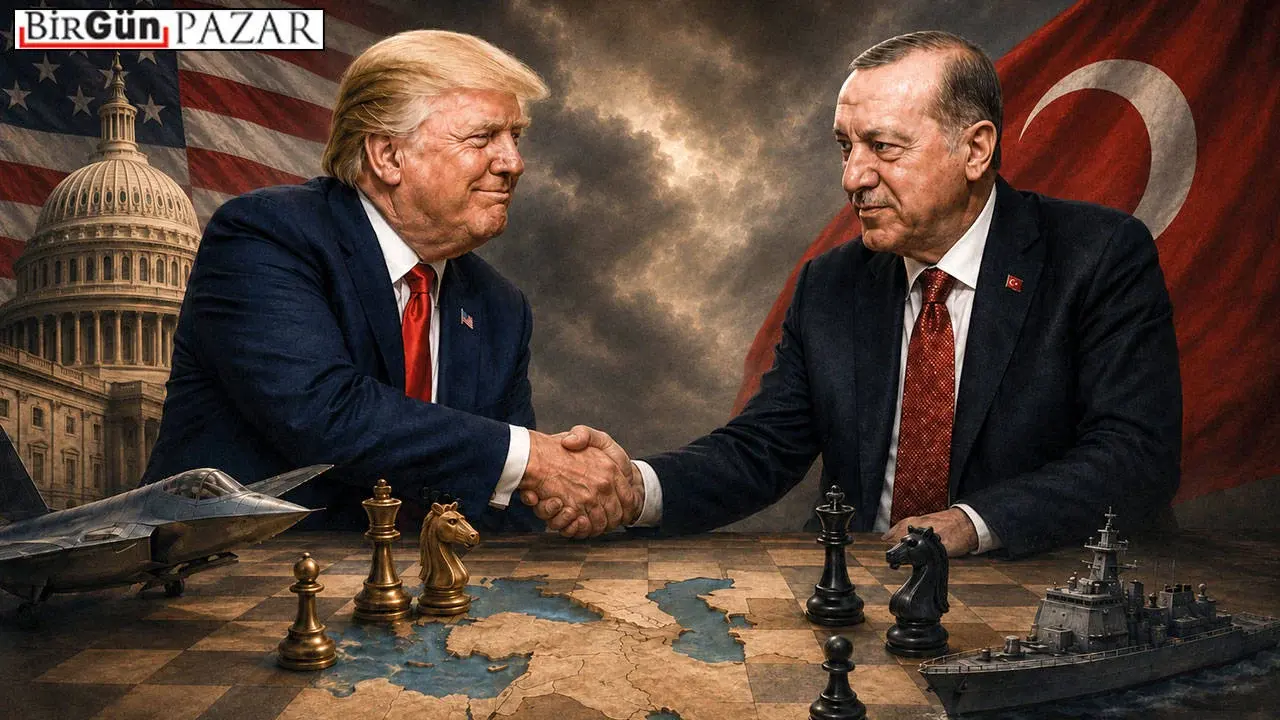
However, in the period we are currently experiencing, a bargaining process is unfolding that is unseen in Turkish history and whose consequences are extremely severe in every respect. In order to remain in power, the Erdoğan administration has been willing to make concessions to the West and, in return, to suppress the opposition, instrumentalise the law, and allow the country to become more authoritarian – and they are implementing this. The balance of internal and external bargaining in the period we are living through rests upon this.
A CASE FROM THE PAST: COLD WAR NEGOTIATIONS
In foreign policy, negotiations are not always written down. Unwritten agreements—reached by consensus and requiring no formal documentation—are also made. Such arrangements have existed in the past.
The bargaining Turkey engaged in with the US after 1945, and particularly after joining NATO, involved allowing the US to benefit from Turkey’s strategic position in exchange for military and economic aid. These were contained in two separate packages until the signing of the DECA agreement in 1980, after which they were consolidated under that agreement.
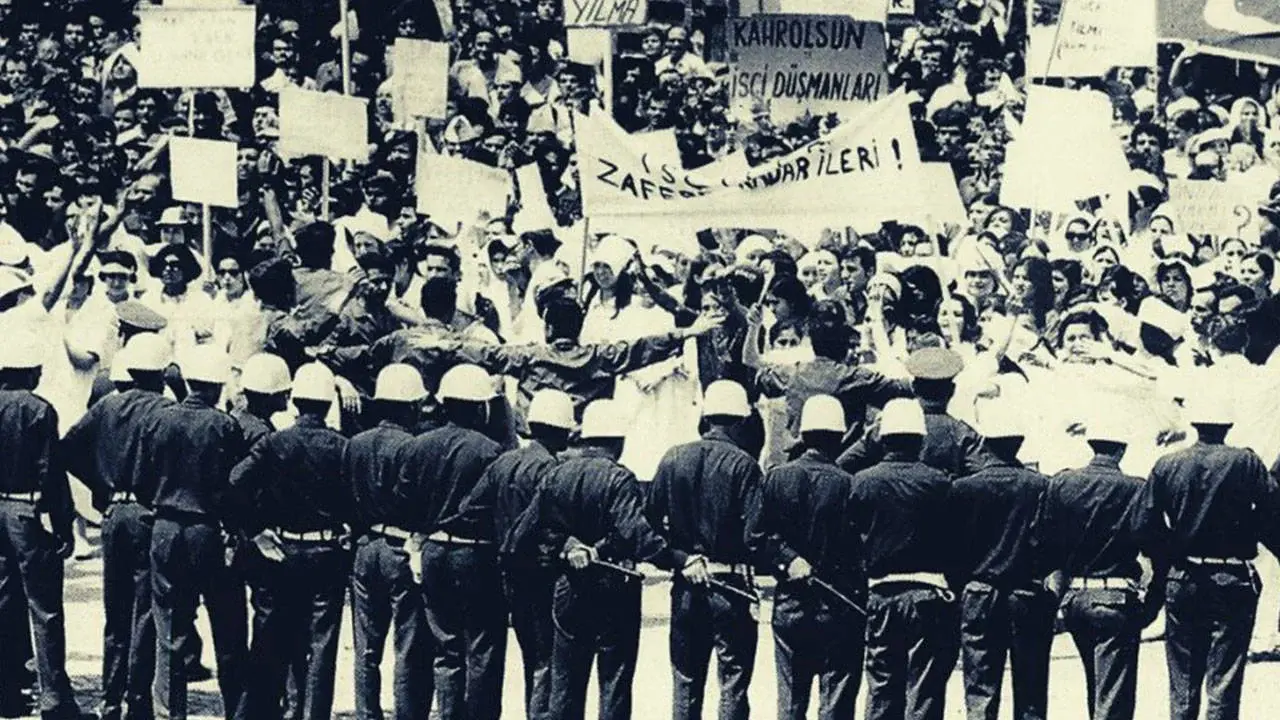
Under Cold War conditions, this model of relations—where Turkey placed its strategic position at the service of the US (military bases, etc.) and, alongside the US, suppressed domestic opposition, particularly the left—was something we always examined with a critical eye in our university lectures, even in the years before the AKP was founded. Consequently, such deals struck with the system are neither new nor unknown to us.
THE ERDOĞAN ERA: BEYOND NEGOTIATION
Erdoğan has maintained his power not only now, when he is most in need of external support, but throughout his entire 23-year rule by negotiating with external powers and making concessions when necessary.
If we compare this regime to the Cold War era, we can highlight the differences under three categories.
1-Ideological. Negotiations in the past were ideologically driven. They had a class-based content aimed at protecting the ruling classes against the Soviets abroad and the left-wing movement at home. It is clear that Erdoğan’s rule is not independent of class concerns and that he represents big business, but from his perspective, he conducted negotiations not along an ideological axis but a pragmatic one.
2- Institutional. The Cold War-era negotiations were institutional in nature. In an environment where security concerns played a central role, the ties established with the Western system were largely shaped around the security bureaucracy. On one side of the bargain lay military aid, whilst on the other lay strategic services.
3- It was party-neutral. With the exception of parties further to the left, such as the TİP, the system parties were all part of this negotiation, regardless of their political spectrum. Nevertheless, it is important to remember that Ecevit and Demirel were the two leaders who challenged this order established with the West. Ultimately, both suffered as a result of coups.
The fundamental difference between the Cold War-era negotiations and the AKP government was that the compromise reached with the West did not depend on the negotiations of a single leader or party for power. Erdoğan’s logic of negotiation was aimed at keeping himself in power, and his counterparts were well aware of this.
Worse still, in every deal struck by Erdoğan’s government, the winners were himself and his counterparts, whilst the loser was Turkey.
For example, this government contributed to the destruction of Syria; when people sought refuge in Turkey, it told its own electorate the story of the ‘ensar’ (hosts), turning these people’s helplessness into a card to play in negotiations with Europe, using them to secure external support for its rule.
It was able to strike a deal along the lines of: “I’ll keep the refugees in Turkey and spare you the burden of the refugee crisis, so you mustn’t object to my rolling back democracy at home.”
Thus, we both bore the cost of the refugees and suffered a loss of democracy. We have been subjected to one of these lose-lose scenarios so that this government might continue.
Similarly, agreeing to purchase the S-400s by paying 2.5 billion dollars—knowing full well that he could not and would not use them to win over Putin—and risking expulsion from the F-35 project, of which he was a part of the manufacturing process, was another example of such a lose-lose bargain.
YOU SUPPORT ME, AND I’LL TURN TURKEY INTO A MIDDLE EASTERN COUNTRY
Erdoğan’s current negotiations are far more dire than his previous ones. The country’s future is being gambled away.
A government elected on the promise of advancing Turkey towards a democratic society and making it an EU member has, at this juncture, become a party to negotiations aimed at keeping Turkey out of the EU and making it a part of the Middle Eastern equation.
The US and Europe also appear to be aligned on this policy. Their starting points may differ, but their destination is the same. As global geopolitical tensions rise, they seem to be in agreement on keeping Turkey within the Middle Eastern equation.
From the US perspective, Turkey has accepted the role of a compliant ally that poses no problems and aligns with US and Israeli interests within the new Middle Eastern order the US is attempting to establish. By joining the ‘Peace Council’ in Gaza—where 72,000 Palestinians were killed—under the name of Trump, it made clear that it has no limits when it comes to making concessions.
In this new Middle East, being established under the supervision of Tom Barrack and marketed with the trappings of Neo-Ottomanist dreams, Iran’s proxies will be eliminated or rendered ineffective; the regime in Iran will be overthrown if possible, or weakened if not; Israel’s permanent security will be guaranteed, more regional countries will recognise Israel’s existence, and ties among US allies will be strengthened to keep Russia and China out of the region.
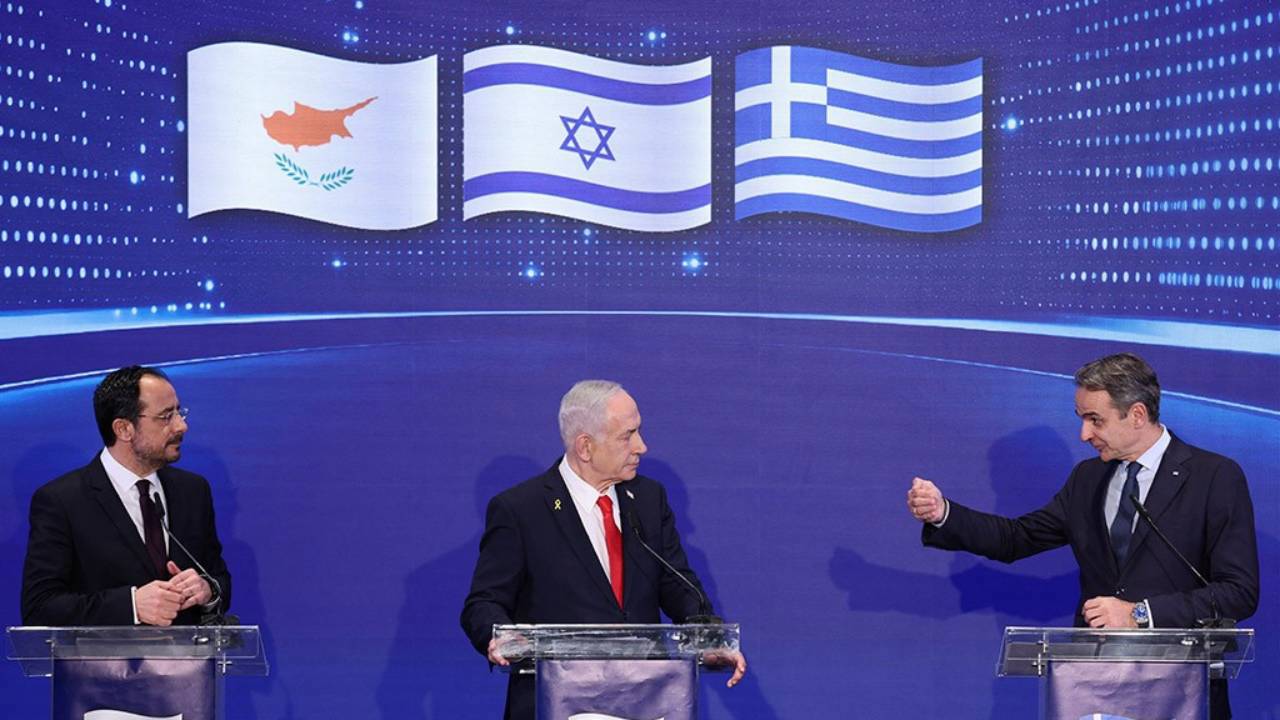
From the EU’s perspective, Turkey would serve as a buffer zone between the Middle East and Europe, absorbing the wave of refugees and preventing them from reaching Europe; it would not trouble Brussels over EU membership, and would even be kept in a position where it could not defend its most basic economic interests by not initiating Customs Union negotiations; It would not cause trouble in the Eastern Mediterranean; it would ensure the security of energy and trade routes within the framework of the EU’s Interregional Connectivity strategy; and its military might would be called upon when needed, but Brussels would decide how, when and in what manner this would occur.
Under such a deal and the resulting order, Turkey’s lot will be an authoritarian regime. What Erdoğan and the West gain will be at the expense of the Turkish people.
We see that, having moved away from the project of the 2000s in which Islamists in Turkey were to democratise and serve as an example to movements in the Middle East, the AKP government in the 2010s negotiated—and reached an agreement on—a Middle Eastern regime model that, whilst the opposite of that earlier vision, is more in keeping with its own nature, all in the name of staying in power. The one-man regime was seen as the most suitable political system for all these negotiations to function. Erdoğan believed he could manage his own electorate through consent and the opposition through coercion, and sought to convince the West of this as well.
TURKEY'S DEEPENING DEPENDENCE
Turkey’s dependence on the Western system is not new; it is a historical and structural phenomenon.
However, this dependence has also transformed and evolved into two distinct forms of dependence on the West.
The first is structural dependence. Despite the narrative of growth during the AKP’s 23-year rule, Turkey’s financial and, more broadly, economic dependence on the West has not diminished but increased. Turkey has become more dependent on Western capital, both in terms of investment and finance. The external debt burden has never decreased, the current account deficit has not narrowed, and, moreover, the economy has become more fragile over the past five years. The docile retreat in the face of Trump’s threat to ‘destroy the economy’ remains fresh in people’s minds.
The second is dependency at the level of political power and its leader. Never before in Turkish history has an elected leader become so dependent on a US president, on the words that come from his mouth, and on the support he provides. This is a first in Turkish history and is deeply regrettable for a country with such great capacity and potential as Turkey.
For in Turkey’s history, no elected politician has ever engaged in such overt bargaining to secure their own power, to push their rival out of politics, to exert pressure on the main opposition party, and in return to consolidate their rule. This situation is not limited to İnönü, who, in response to US President Johnson’s Letter, declared, “A new world will be established, and Turkey will take its place in that world.” In the past, when political competition was fierce and polarisation was once again intense, it did not occur to politicians such as Demirel and Ecevit to negotiate with external powers to push their rivals out of politics, to use state resources to attack rival municipalities, to imprison their rivals in elections, or to appoint trustees to opposition parties. Indeed, even Özal—who did not deny his pro-American stance and accepted a ministerial post under the coup regime—was willing, when the time came, to risk losing an election and relinquishing power.
At this juncture, we are being governed by a political regime that is, to an extent unprecedented in Turkish history, fragile and conciliatory towards external powers. As bargaining has been reduced to a mere concern for political survival, dependency has deepened, and the government’s room for manoeuvre in foreign policy has, contrary to what is claimed, become even more restricted.
THE PLAN HAS HIT A SNAG
A single man, backed by a power bloc shaped by the Western world, Bahçeli, Perinçek, certain sections of capital and the remnants of a security bureaucracy with criminal elements, is attempting to stay afloat by relegating Turkey to a lower division within the international system. Domestically, one-man rule, the elimination of the opposition as a source of hope, the transfer of financial resources and service to regional strategy are the elements of this new order.
But this order, this construct, has a very weak link. There is no place for society within it. It is an archaic power scheme being attempted with politicians approaching their eighties—politicians who can no longer generate legitimacy in any sphere of life, who are outdated and decrepit, and who have lost all connection with the changing social dynamics and the world-shattering changes taking place globally. Neither the country’s leader, nor the person brought to the helm of the CHP by a court ruling, nor the figure pulling the strings behind the scenes possesses the capacity or awareness to understand or grasp the world.
They are not in a position to recognise either the hardships faced by pensioners or the rapid digital change taking place in the world and its consequences. There is no place in Turkey’s future for politicians who are old in both body and spirit. The process we are experiencing is akin to propping up a crumbling wooden building with beams.
With its internal and external components, this vast system (hegemonic bloc) operates with an excessive focus on politics within the relationship between society and politics. In this age of communication, it imagines that four elderly men can steer this dynamic society.
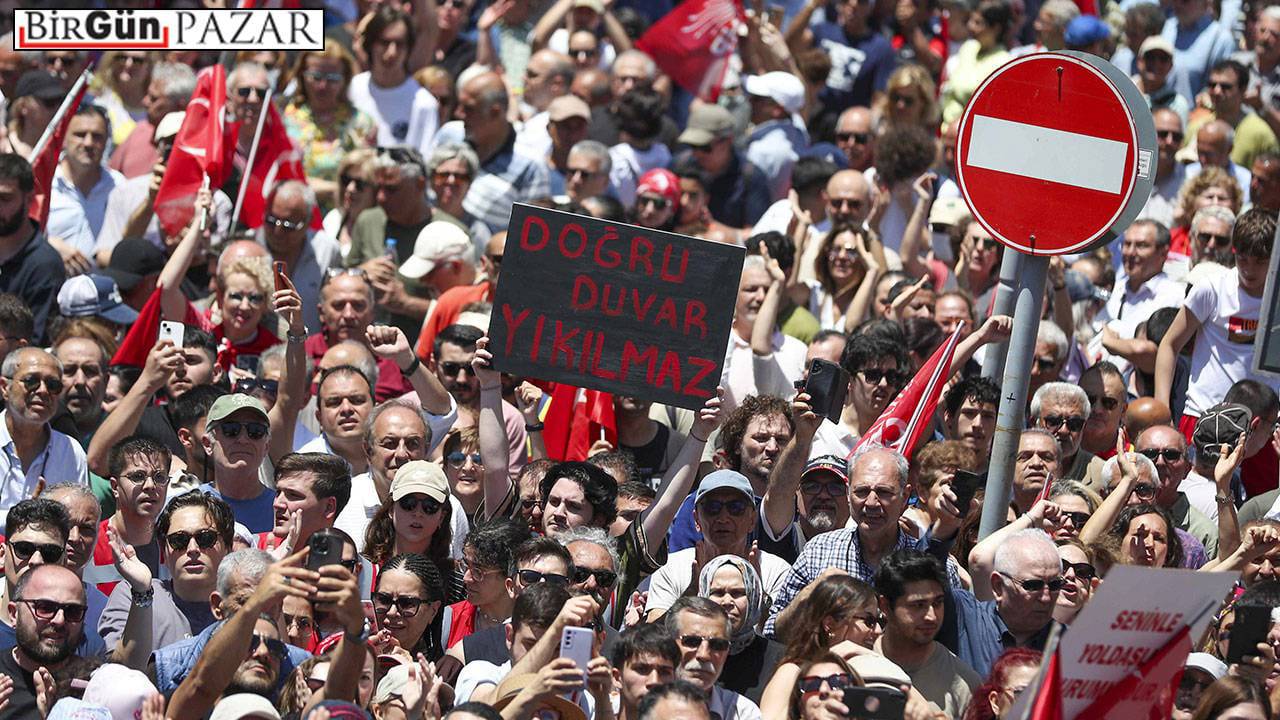
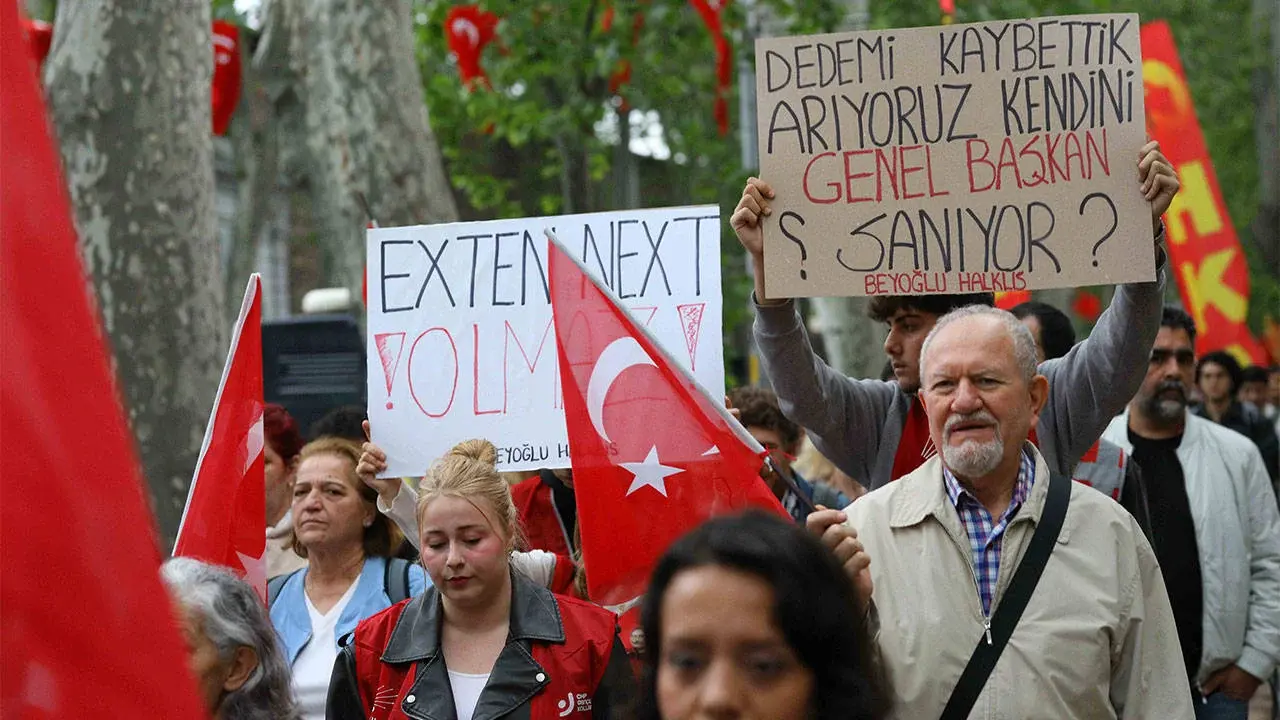
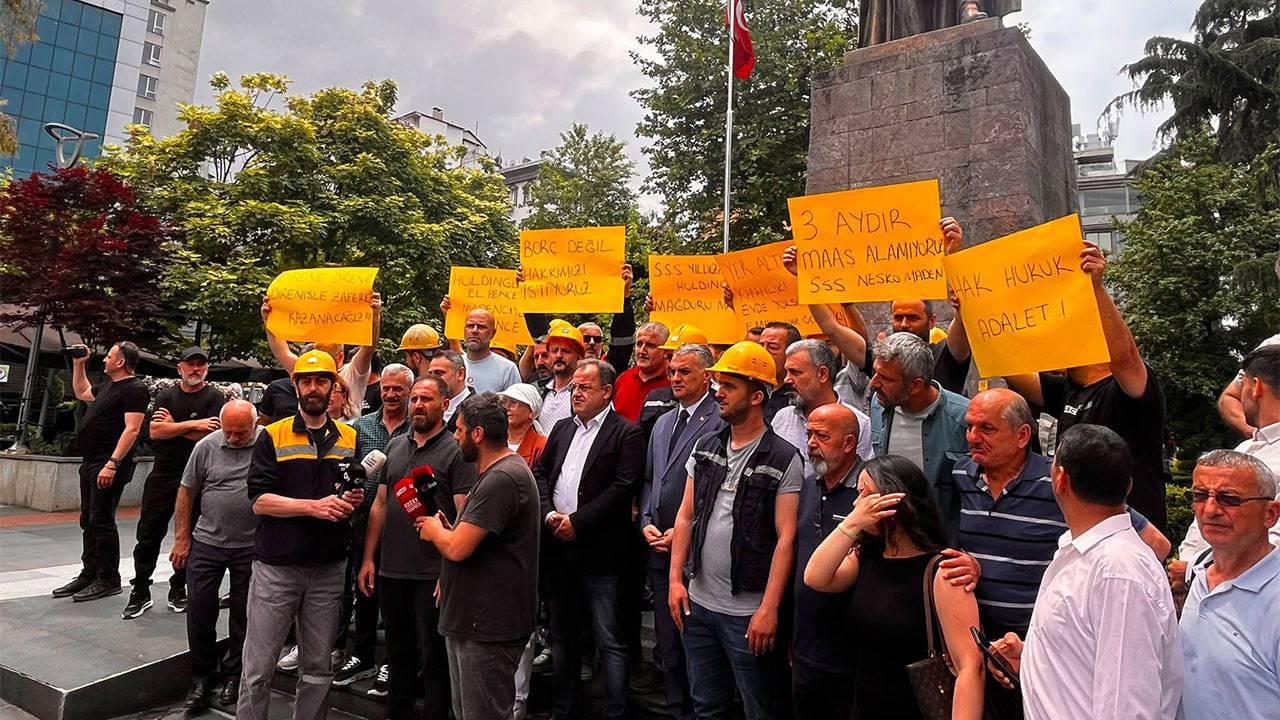
That is why every move they make backfires, because whilst attempting to design politics from above and from outside, they fail to take into account the transformations and expectations within society. They cannot foresee the reaction society has shown towards Kılıçdaroğlu, who has accepted the role of a trustee.
In this age of communication, they will realise that they cannot keep a government afloat with external support if it does not emerge from the grassroots and cannot generate legitimacy.
Note: This article is translated from the original article titled En kirli pazarlık, published in BirGün newspaper on June 15, 2026.