Foreign News
Amid wars, political tensions and energy security concerns, the Eastern Mediterranean—which has become the focal point of geopolitical maneuvering—is entering a new phase of energy and military cooperation.
Southern Cyprus, Israel, Greece and the US have agreed to establish the Eastern Mediterranean Energy Centre. At the 3+1 Eastern Mediterranean Energy Dialogue Foreign Ministers’ meeting held in Houston, US, the parties signed a declaration of intent to develop a joint roadmap for energy cooperation.
The declaration was signed by Southern Cyprus’s Energy Minister Michalis Damianos, Greece’s Energy Minister Stavros Papastavrou, Israel’s Ambassador to the US Yechiel Leiter, and US Energy Minister Chris Wright.
It was reported that the four countries will begin a series of working group meetings in the coming months to prepare a roadmap setting out objectives and actions in the areas of energy security, offshore natural gas development, infrastructure, innovation and research.
Speaking at the meeting, South Cyprus’s Energy Minister Michalis Damianos said, “At a time when countries are seeking safer and more reliable energy sources, cooperation between the four countries has become even more important.”
HUGE RESERVES
American and European energy giants such as Chevron, Shell, ExxonMobil and Total Energies have been conducting natural gas exploration in Cyprus’s exclusive economic zone for years. Since 2011, six natural gas fields—Aphrodite, Kronos, Zeus, Calypso, Glafkos and Pegasos—have been discovered, containing a total of approximately 20 trillion cubic metres of gas reserves.
Damianos highlighted steps taken to advance plans for the development of these reserves.
Noting that energy security “is no longer merely about finding fuel”, Damianos said, “Modern threats include cyberattacks, sabotage and other hybrid risks. This situation requires countries to work together to protect critical infrastructure.”
The activities of international energy giants were described as a sign of the government’s confidence in Cyprus’s energy potential and its role as a reliable partner in the region. Government Spokesperson Konstantinos Letymbiotis described the decision taken at the cabinet meeting as a development of “political and geostrategic” importance.
CENTER OF THE US PLAN
The US had proposed the India-Middle East-Europe Economic Corridor (IMEC) project to link India to Europe, aiming to counter China’s “Belt and Road” initiative. Centred on the Eastern Mediterranean, this plan aims not only to establish a trade route linking Asia, the Middle East and Europe via railways and maritime links, but also to keep critical trade hubs in the region within the geopolitical orbit of the US and its allies. The plan also aims to strengthen the Abraham Accords, which seek to foster economic and diplomatic ties between regional countries and Israel.
MILITARY BUILD-UP IN THE REGION
Following the outbreak of the Iran War, Washington, seeking to ensure the southern part of the island was prepared for large-scale operations, had also taken steps to modernise an air and a naval base located in Southern Cyprus.
Following the attacks launched by the US and Israel against Iran, which saw the British RAF military base in Cyprus targeted, several NATO countries, led by Greece, the UK and France, increased their military presence in the region.
ALLIANCE DEEPENS
The ‘3+1’ format, focusing on energy security and military cooperation in the Eastern Mediterranean between the three countries in the region – Southern Cyprus, Greece, Israel – and the US, was first implemented in 2019.
In March, Southern Cyprus and Egypt signed a framework agreement in Cairo, as part of an energy conference, outlining the development of natural gas fields and cooperation and integration in the energy sector. The aim is to process natural gas from the Afrodit and Kronos fields in Egypt for export to European markets.
QatarEnergy and ExxonMobil, meanwhile, signed an agreement with Cairo in May to transport gas from off the coast of Cyprus to Egypt’s LNG facilities for export to Europe.
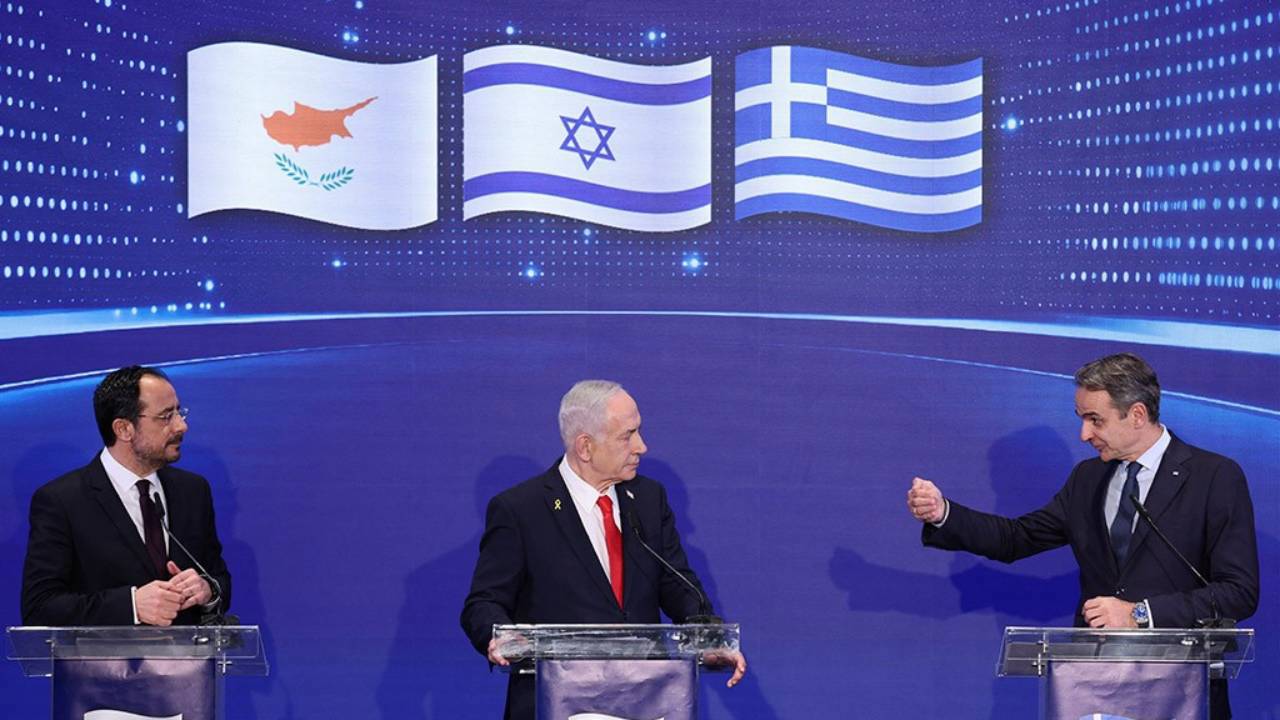
Cyprus, Greece and Israel have been taking steps towards an energy, security and military cooperation alliance in the Eastern Mediterranean since the early 2010s. The decision by Israeli Prime Minister Binyamin Netanyahu, Greek Prime Minister Kyriakos Mitsotakis and Cypriot Prime Minister Nikos Christodoulides in December 2025 to expand the scope of the three-way alliance in Jerusalem demonstrated that this rapprochement had taken concrete form in recent months.
Following the leaders’ discussions, military officials who met in Southern Cyprus signed joint action plans envisaging joint military exercises and the enhancement of military capabilities in the fields of defence, intelligence sharing and maritime security.
THE “SENSITIVITY” OF ANKARA
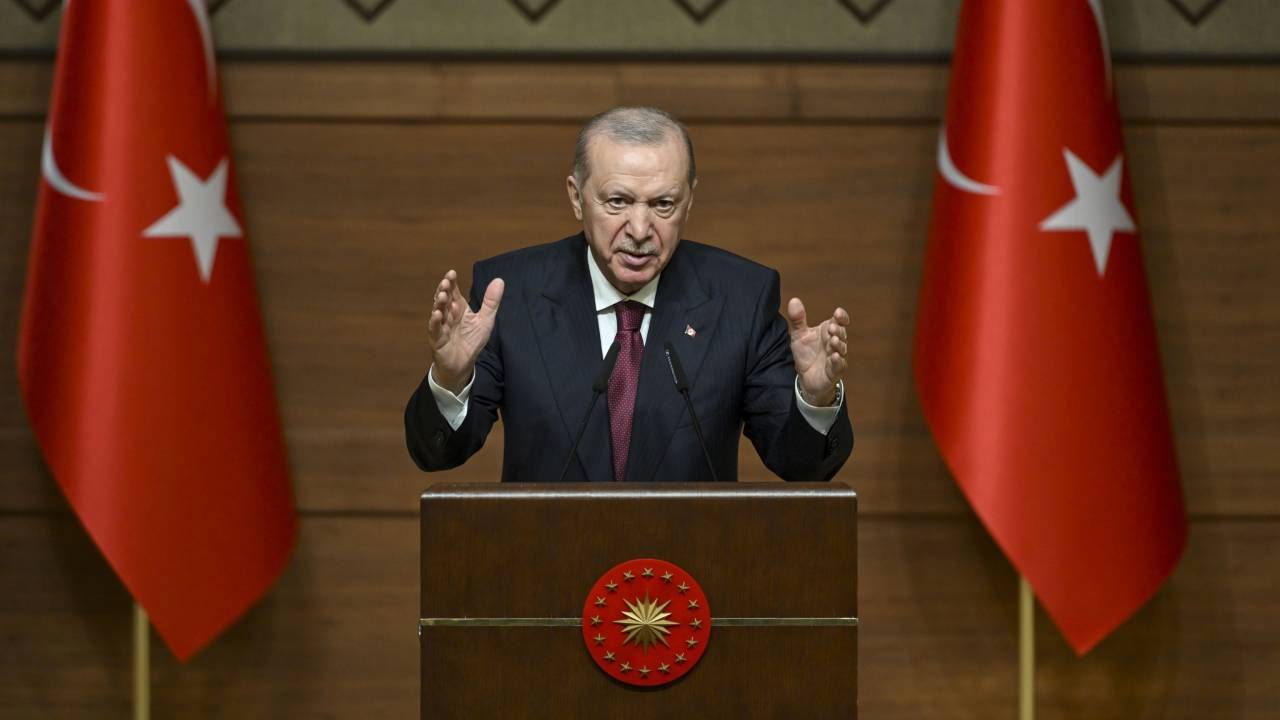
This alignment, which directly conflicts with Ankara’s concerns regarding maritime jurisdiction in the region and the Blue Homeland doctrine, is escalating tensions with Turkey. At the Jerusalem summit, Netanyahu, referring to Turkey, stated that they were prepared to defend themselves, adding, “No one should test our determination". Speaking at the Antalya Diplomacy Forum in April, Foreign Minister Hakan Fidan stated that “Israel has established an anti-Muslim alliance in the region”, adding that “Israel, Southern Cyprus and Greece have entered into concrete military structures, and this cannot be ignored”. On the other hand, Fidan did not mention the US, the “+1” member of the alliance, in his speech.
Note: This article is translated from the original article titled Enerji kavgasında barut kokusu, published in BirGün newspaper on June 13, 2026.